

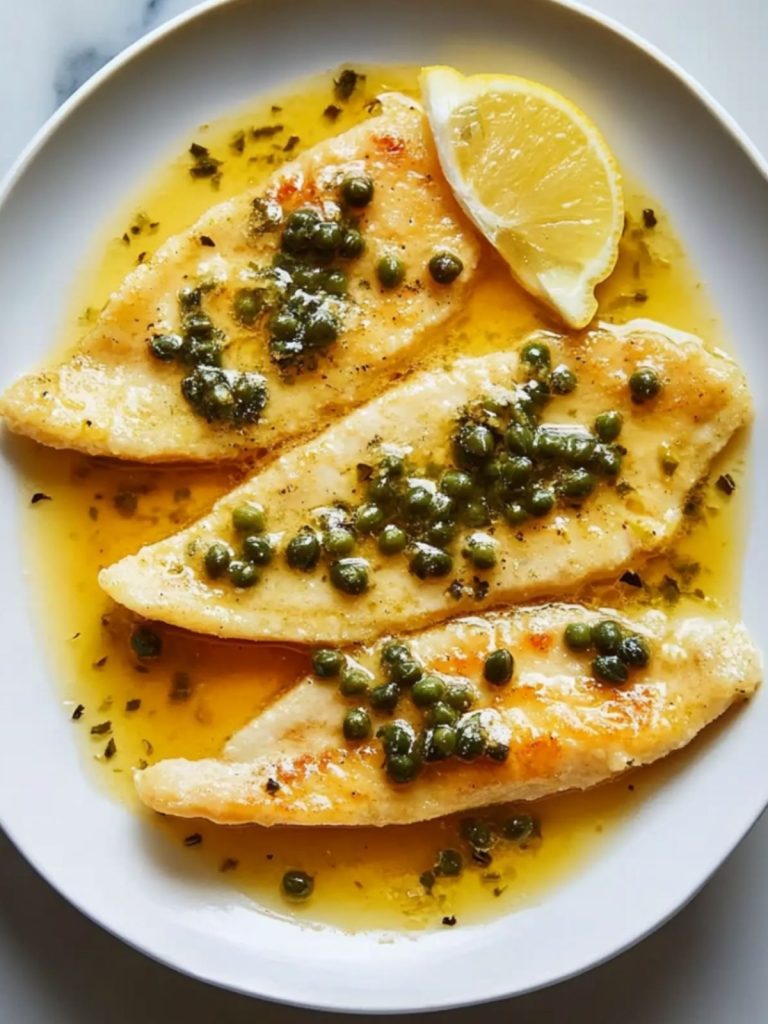
This Lemon Caper Sauce Recipe showcases the remarkable qualities of capers from the key ingredients. My appreciation for these tiny Mediterranean gems developed gradually—initially put off by their intense brininess, I eventually discovered their incredible ability to transform simple dishes with bursts of tangy complexity. Capers are actually flower buds from the caper bush, hand-picked before blooming and preserved in salt or vinegar, which explains their distinctive sharp flavor. Nutritionally, they’re surprisingly rich in antioxidants and quercetin, a powerful anti-inflammatory compound. This sauce is absolutely magical when paired with my Chicken Piccata – the capers and lemon create that classic Italian flavor combination that never fails to impress. For seafood lovers, try drizzling it over my Baked Cod with Lemon and Garlic – the bright, tangy sauce perfectly complements the delicate fish and elevates a simple weeknight dinner into something restaurant-worthy.

Perfect Dishes To Showcase Your Lemon Caper Sauce
For more ways to use your sauce and Mediterranean-inspired favorites, try:
- Chicken Piccata – Classic Italian dish where capers and lemon create that perfect flavor combination
- Baked Cod with Lemon and Garlic – Delicate fish that’s elevated to restaurant-worthy with bright, tangy sauce
- Perfect Lemon Chicken Recipe – Another lemon-forward dish that pairs beautifully with caper complexity
- Mediterranean Baked Feta Eggs – Mediterranean flavors that complement the same ingredient profile
Why You’ll Love Lemon Caper Sauce Recipe?
This vibrant sauce comes together in just 5 minutes and transforms ordinary meals into restaurant-quality dishes with minimal effort. Here’s why:
• Lightning Fast: Complete preparation takes under 5 minutes from start to finish, making it perfect for busy weeknight dinners when time is precious.
• Make-Ahead Friendly: Prepare components separately and combine when needed, or make the full sauce up to 3 days ahead for optimal freshness (stores safely for up to 1 week).
• Refrigerator Storage: Keeps beautifully in the fridge for up to one week, though it tastes freshest within the first three days.
• Weeknight Versatility: Elevates everything from simple grilled chicken to steamed vegetables, turning basic ingredients into impressive weeknight meals that feel special.
• Budget Conscious: Uses pantry staples and affordable ingredients to create a gourmet flavor profile that rivals expensive restaurant sauces at a fraction of the cost.
This recipe proves that exceptional flavor doesn’t require complicated techniques or hours in the kitchen—just smart ingredient combinations that deliver maximum impact.

Ingredients Notes
• Unsalted Butter: I always choose European-style unsalted butter for its higher fat content and richer flavor. The extra creaminess creates a silkier sauce base.
• Garlic: I select firm, plump cloves without green sprouts, which can taste bitter. Fresh garlic provides the aromatic foundation without overpowering the delicate lemon-caper balance.
• Lemon Zest: I only use organic lemons since the peel goes directly into the sauce. I look for thin-skinned, heavy lemons that yield the most fragrant oils.
• Fresh Lemon Juice: I squeeze lemons myself rather than buying bottled juice. Fresh juice has brighter acidity and no preservatives that can create off-flavors.
• Capers: I prefer small capers packed in brine over salt-packed ones for convenience. I look for firm, intact buds rather than mushy or broken pieces.
• Fresh Parsley: I choose flat-leaf parsley over curly for its superior flavor. I look for bright green leaves without yellowing or wilting for maximum freshness.
• Kosher Salt: I use Diamond Crystal kosher salt for its clean taste and easy measuring. Its flaky texture dissolves quickly without leaving grittiness.
How to Make Lemon Caper Sauce
- Prepare your ingredients first. Mince the garlic finely, zest the lemon using a microplane or fine grater, squeeze the lemon juice, and chop the parsley. I always prep everything before I start cooking since this sauce comes together quickly.
- Melt the butter in a small saucepan over medium-low heat. Watch for the butter to fully melt and start to foam slightly, which takes about 1-2 minutes. Keep the heat gentle to prevent browning.
- Add the minced garlic to the melted butter. Stir constantly and cook for 30-60 seconds until fragrant but not browned. The garlic should sizzle gently and release its aroma.
- Remove the pan from heat and immediately add the lemon zest. I like to add it off the heat to preserve the bright citrus oils. Stir it in and let it infuse for about 30 seconds.
- Whisk in the fresh lemon juice gradually. Add it slowly while whisking to help the sauce emulsify and prevent the butter from separating. The mixture should look smooth and creamy.
- Stir in the drained capers and chopped parsley. Mix gently to distribute evenly throughout the sauce. The capers will add little bursts of briny flavor.
- Season with kosher salt to taste. Start with just a pinch since the capers already add saltiness. Taste and adjust as needed before serving immediately while warm.
Expert Tips for Perfect Lemon Caper Sauce
- Temperature Control is Everything Keep your heat at medium-low throughout the entire process to prevent the butter from browning or separating. I’ve learned that patience with gentle heat creates the silkiest, most stable sauce.
- Add Lemon Juice Off the Heat Remove the pan from the burner before whisking in the lemon juice to prevent curdling. This simple step ensures your sauce stays smooth and emulsified rather than breaking into greasy puddles.
- Rinse Capers for Balance I give my capers a quick rinse under cold water before adding them to remove excess brine—just enough to prevent overwhelming saltiness while preserving their distinctive tangy flavor.
- Serve Immediately for Best Results This sauce is at its peak when served warm and fresh from the pan. If you must hold it, keep it warm in a double boiler and whisk occasionally to maintain the smooth texture.
- Double the Recipe for Leftovers I often make extra since this sauce transforms leftover proteins and vegetables into something special. Store covered in the refrigerator for up to a week and gently reheat before using.
- Zest Before You Juice Always zest your lemon before cutting and juicing it – trust me, it’s nearly impossible to zest a halved lemon efficiently. This small prep step saves time and frustration.
Storage Tips for Lemon Caper Sauce
- Refrigerate in Airtight Containers I store leftover sauce in glass jars or sealed containers for up to one week in the refrigerator.
- Expect Natural Separation When Cold The butter will solidify and separate when chilled, but gentle reheating and whisking restores the smooth texture perfectly.
- Reheat Gently Over Low Heat Warm the sauce slowly in a small saucepan over low heat, whisking constantly to re-emulsify the ingredients smoothly.
- Avoid Freezing This Delicate Sauce I don’t recommend freezing since the butter-based emulsion breaks down completely, creating an unappetizing separated mess when thawed.
- Store Without Fresh Herbs for Longer Life If making ahead, store without fresh parsley and stir in newly chopped herbs after reheating to maintain bright color and flavor.
- Use Within Three Days for Best Quality While the sauce stores safely for up to one week, I find it tastes freshest and most vibrant within three days of making.
Variations and Substitutions for Lemon Caper Sauce
- Vegan Butter Alternative Replace regular butter with high-quality vegan butter for dairy-free option; maintains creamy texture with slightly different flavor profile.
- Olive Oil Mediterranean Style Substitute extra virgin olive oil for butter to create lighter, more Mediterranean sauce with robust, fruity flavor notes.
- Lime Citrus Twist Swap lemon juice and zest with fresh lime for tropical variation; creates brighter, more tart flavor perfect for fish.
- Chopped Olives Instead of Capers Replace capers with finely chopped green olives for milder brininess and softer texture while maintaining Mediterranean character completely.
- Fresh Dill Herb Swap Use fresh dill instead of parsley for Scandinavian-inspired flavor; pairs exceptionally well with salmon and other seafood dishes.
- Shallot Garlic Substitute Replace minced garlic with finely minced shallots for sweeter, more delicate onion flavor that won’t overpower delicate proteins.

Perfect Pairings and Serving Ideas for Lemon Caper Sauce
- Pan-Seared Salmon Fillets Drizzle over flaky salmon to complement the fish’s richness while bright lemon cuts through oils and capers add textural interest.
- Grilled Chicken Piccata Style Pour over pounded chicken breasts for classic piccata; the tangy sauce balances mild poultry while adding restaurant-quality sophistication effortlessly.
- Roasted Asparagus Spears Toss with tender asparagus to enhance the vegetable’s earthy flavor; buttery richness complements natural sweetness while capers provide contrast.
- Crisp Sauvignon Blanc Wine Pair with chilled Sauvignon Blanc whose citrus notes echo the lemon while herbaceous qualities complement parsley and garlic beautifully.
- Butter-Poached Halibut Serve alongside delicate halibut to enhance the fish’s mild flavor without overwhelming; creates elegant, cohesive flavor profile together.
- Garlic Mashed Potatoes Spoon over creamy potatoes for rich comfort food; tangy sauce cuts through heavy starches while adding bright, fresh elements.
Frequently Asked Questions About Lemon Caper Sauce
Q: Why did my sauce separate or look greasy? A: Heat was too high or lemon juice added too quickly; reheat gently while whisking.
Q: Can I make this sauce ahead of time for entertaining? A: Yes, make up to 3 days ahead for optimal freshness; stores safely for 1 week total.
Q: What should I do if my sauce tastes too salty? A: Add more lemon juice and butter to balance the saltiness from capers.
Q: Can I use bottled lemon juice instead of fresh lemons? A: Fresh is best for flavor, but bottled works in a pinch for convenience.
Q: How long does leftover sauce stay good in the refrigerator? A: Store covered for up to one week; reheat gently before serving again.
Q: What’s the best way to reheat without the sauce breaking? A: Use low heat and whisk constantly until smooth and creamy texture returns.
PrintLemon Caper Sauce Recipe

Quick 5-minute Lemon Caper Sauce Recipe with butter, garlic & fresh herbs. Perfect for fish, chicken & vegetables. Restaurant-quality flavor at home!
- Prep Time: 5 minutes
- Cook Time: 5 minutes
- Total Time: 10 minutes
- Yield: 4 servings (¾ cup total)
Ingredients
- 4 tablespoons (2 ounces) unsalted butter
- 1 small clove garlic, minced
- 1 teaspoon lemon zest (from 1 lemon)
- 2 tablespoons freshly squeezed lemon juice
- 2 teaspoons capers, drained
- 1 to 2 teaspoons finely chopped fresh parsley
- Kosher salt, to taste
Instructions
- Prepare your ingredients first. Mince the garlic finely, zest the lemon using a microplane or fine grater, squeeze the lemon juice, and chop the parsley. I always prep everything before I start cooking since this sauce comes together quickly.
- Melt the butter in a small saucepan over medium-low heat. Watch for the butter to fully melt and start to foam slightly, which takes about 1-2 minutes. Keep the heat gentle to prevent browning.
- Add the minced garlic to the melted butter. Stir constantly and cook for 30-60 seconds until fragrant but not browned. The garlic should sizzle gently and release its aroma.
- Remove the pan from heat and immediately add the lemon zest. I like to add it off the heat to preserve the bright citrus oils. Stir it in and let it infuse for about 30 seconds.
- Whisk in the fresh lemon juice gradually. Add it slowly while whisking to help the sauce emulsify and prevent the butter from separating. The mixture should look smooth and creamy.
- Stir in the drained capers and chopped parsley. Mix gently to distribute evenly throughout the sauce. The capers will add little bursts of briny flavor.
- Season with kosher salt to taste. Start with just a pinch since the capers already add saltiness. Taste and adjust as needed before serving immediately while warm.